The Web Design and Graphic Design Scam
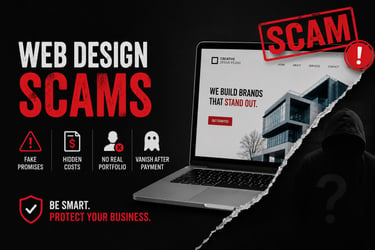
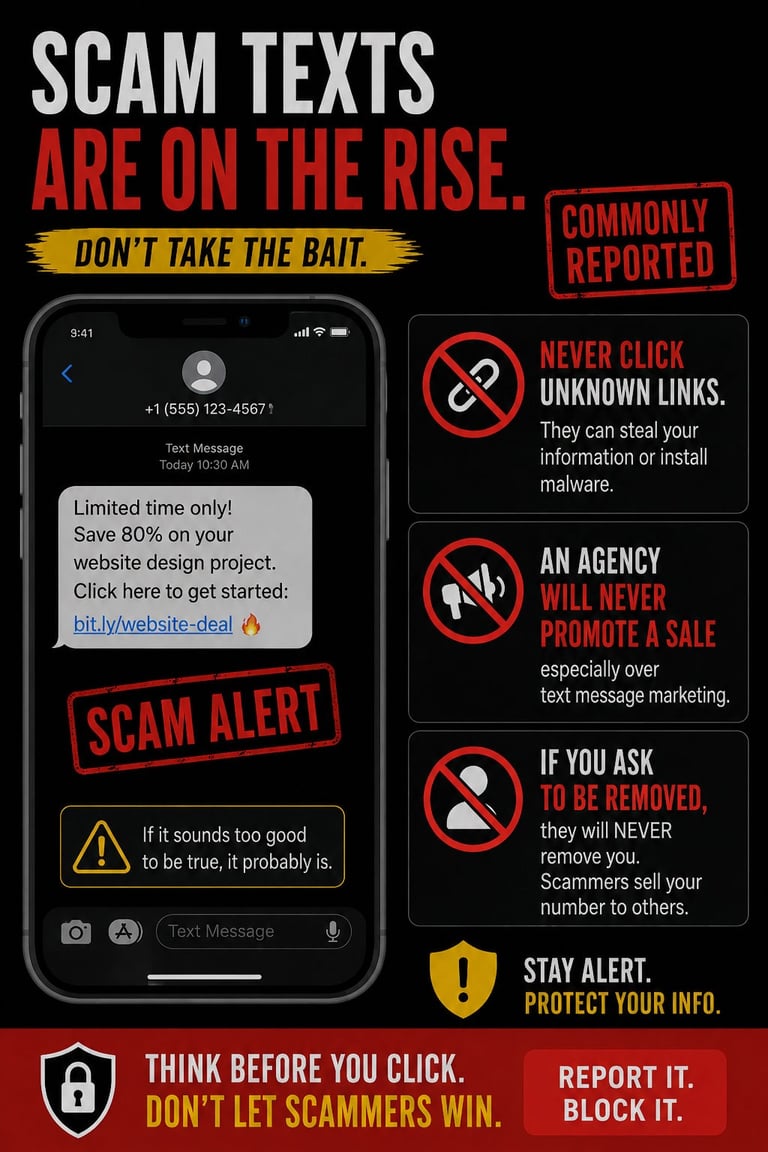
Los Angeles, CA - If you've owned a business for any amount of time, you've probably received the call.
The person on the other end sounds professional. They tell you they specialize in websites, graphic design, SEO, social media, branding, or digital marketing. Their pricing sounds surprisingly affordable. Their sales pitch is polished. Their website appears legitimate. At first glance, everything seems to check out.
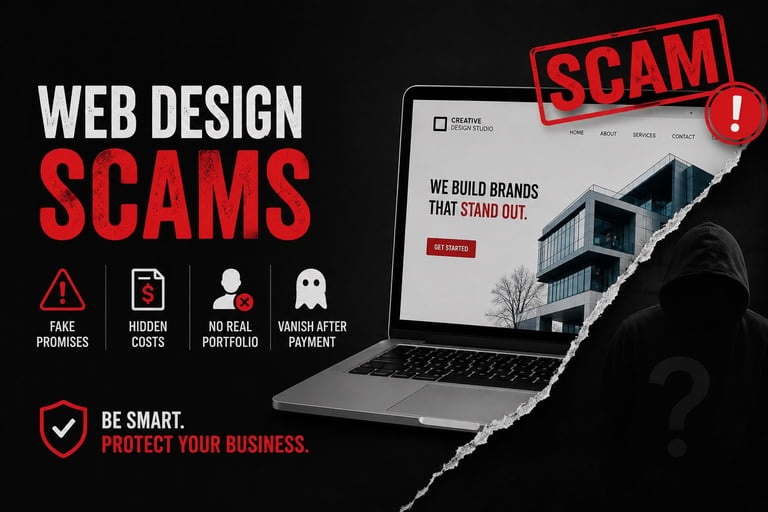
Unfortunately, not every creative agency is what it claims to be.
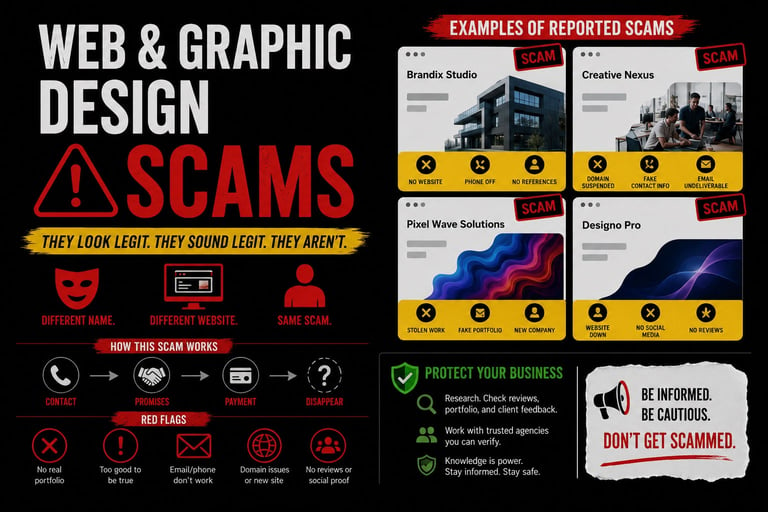
Over the years, a growing number of questionable operations have appeared online offering web design and graphic design services. On the surface, they look like legitimate agencies. They have professional websites, business names, logos, and sales representatives. But when you start digging deeper, the cracks begin to show.
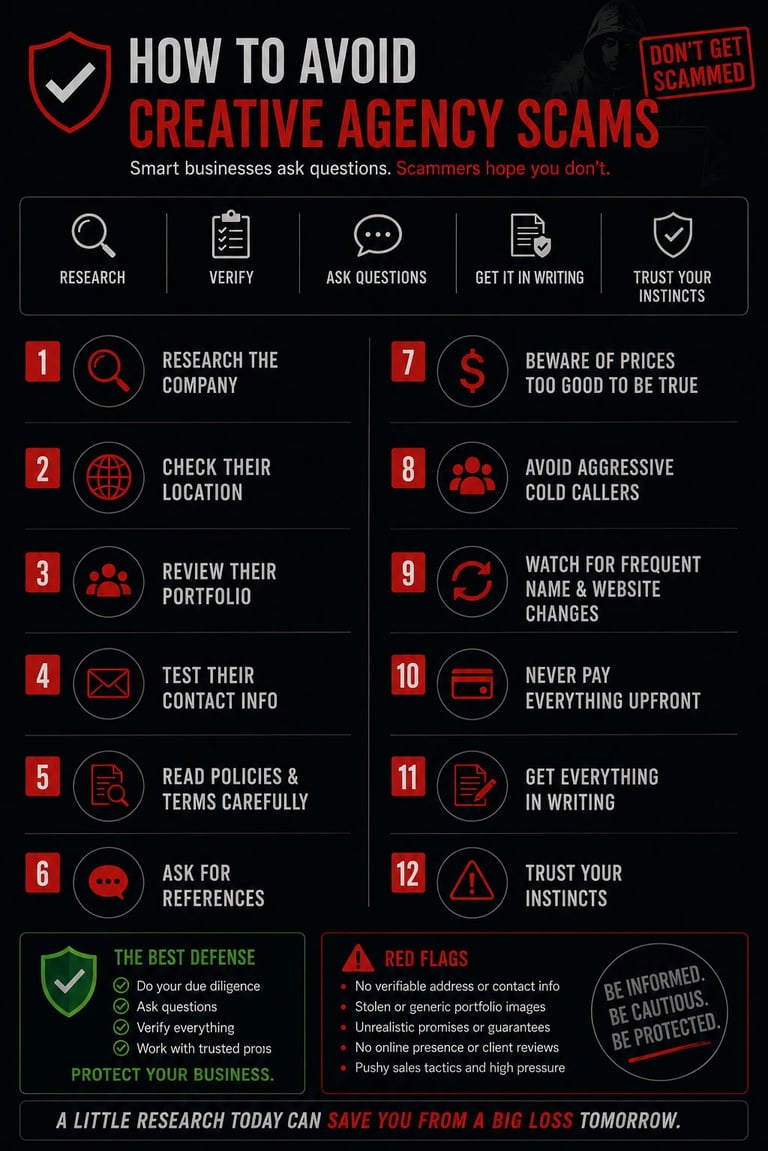
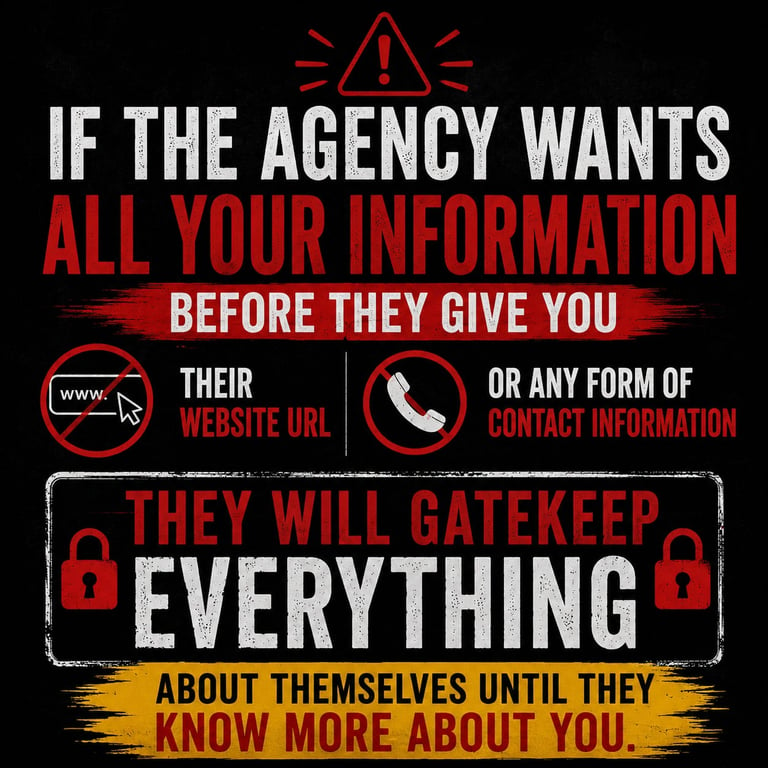
One of the biggest red flags is how difficult it is to verify who they actually are.
A legitimate agency leaves a footprint. You can find their work. You can find mentions of their company. You can see projects they've completed, reviews from real clients, and examples of their creative process. Their team members often have professional profiles, portfolios, or a visible online presence.
The questionable agencies often have none of that.
Try searching for their company name on Google. Search for reviews. Search for completed projects. Search for client testimonials outside of their own website. Sometimes you'll discover that very little exists. In some cases, the company appears almost invisible outside of its own marketing materials.
That's a problem.
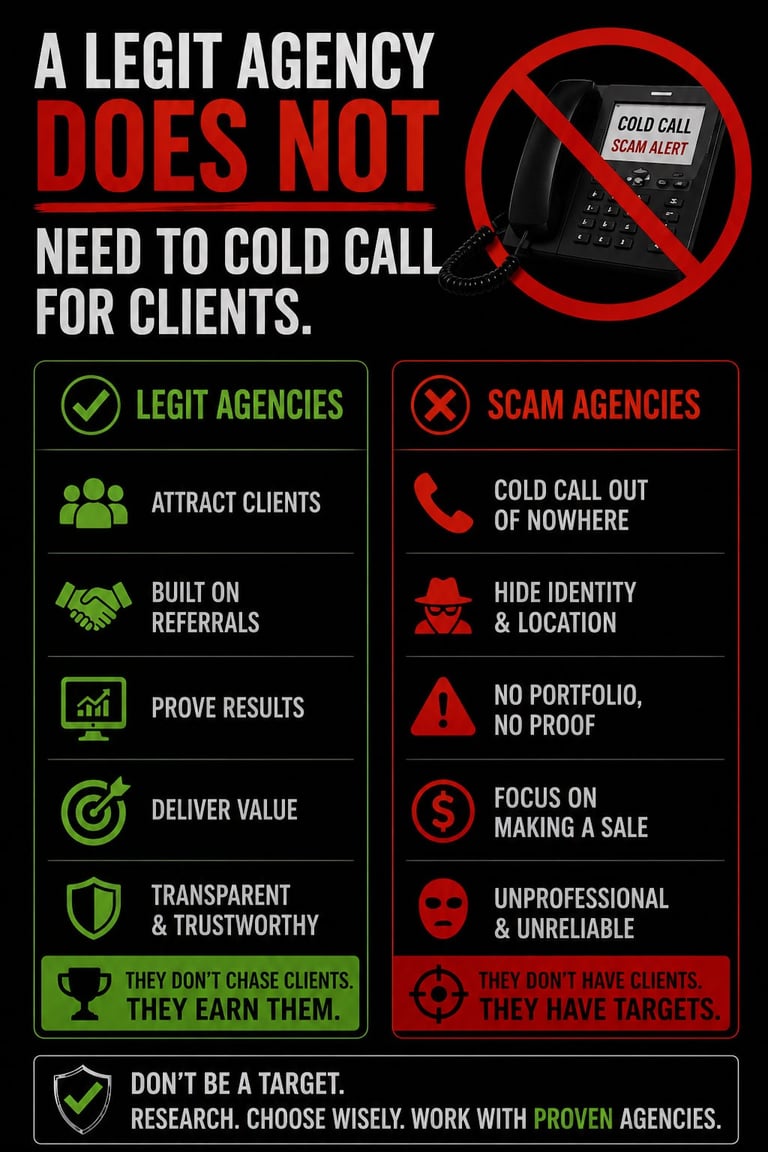
A legitimate creative agency typically wants people to find them. Their business depends on reputation. Most successful agencies are built on referrals, portfolios, networking, repeat clients, and online visibility. They don't need to rely exclusively on aggressive cold-calling campaigns because their work speaks for itself.
Another warning sign is constant rebranding.
Many scam operations eventually develop a reputation online. Complaints begin to surface. Negative reviews start appearing. Discussions show up on forums and social media. Once that happens, the company simply changes its name, purchases a new domain, gets a new phone number, and starts over.
The website changes.
The business name changes.
The phone number changes.
But the operation behind it remains the same.
To a new potential customer, it appears to be a completely different company when, in reality, it's just the latest version of an old scheme.
One area many people overlook is the Privacy Policy and Terms & Conditions pages.
Most people never read them.
You should.
Scam operations often copy and paste these pages from other websites. At first glance, everything appears professional. However, if you look closely, you'll sometimes find missing contact information, incomplete business details, broken email addresses, placeholder text, or information that doesn't match the company you're dealing with.
Try sending an email to the contact address listed in the policy.
Does it work?
Does someone respond?
Does the email bounce back?
A legitimate company usually pays attention to these details because legal and compliance information matters. Their contact information is typically accurate, consistent, and easy to verify.
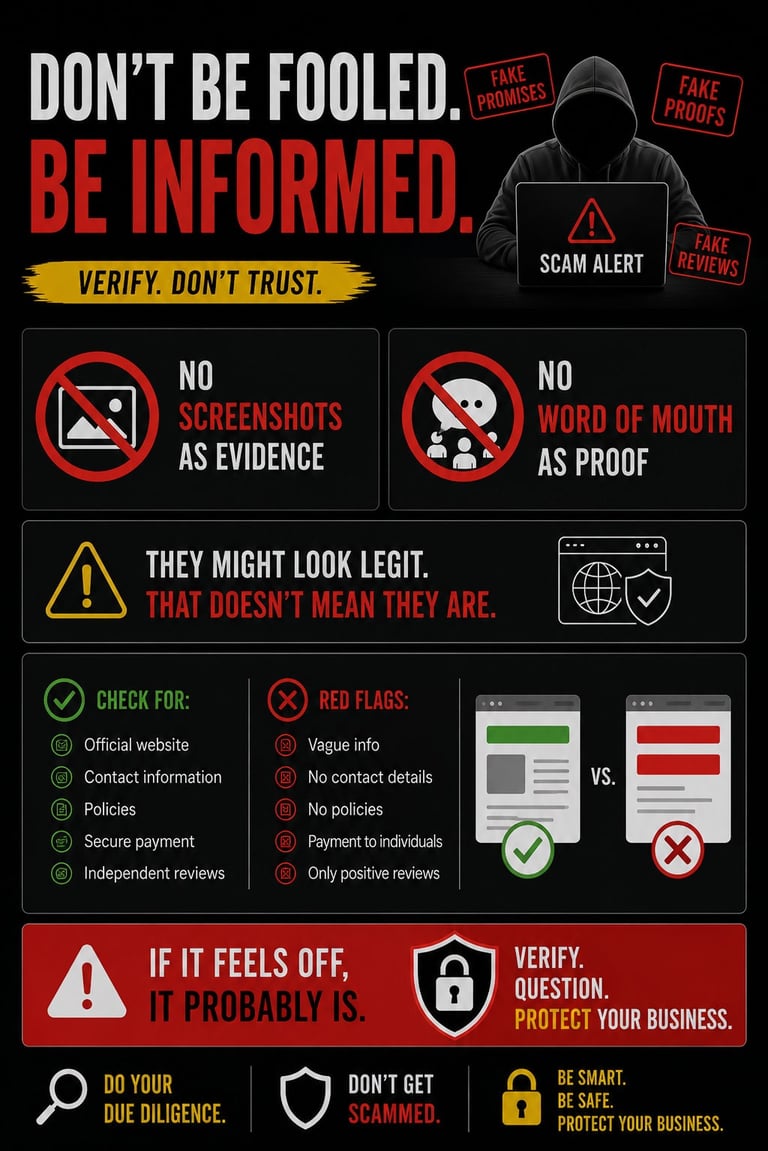
Another simple test is asking for examples of recent work.
Not screenshots.
Not mockups.
Real projects.
Ask for live website links. Ask who designed them. Ask how long they've been maintaining them. Ask for references if the project budget is significant.
A professional agency should be able to provide clear examples of work they've completed.
If the conversation becomes vague, defensive, or confusing, that should raise concerns.
If you're currently looking for creative services, my recommendation is simple: take your time.
Research companies thoroughly.
Look for agencies that have a visible history.
Search for businesses near you whenever possible.
Schedule meetings.
Ask questions.
Verify who you're working with.
A good agency won't be offended by your due diligence. In fact, they'll usually welcome it.
And here's another perspective that many people don't consider.
If you're a small business owner just getting started, it may be worth learning some basic design skills yourself.
Today's tools make it easier than ever to create a simple website, build marketing materials, and establish an online presence without spending thousands of dollars upfront. Learning the fundamentals can help you avoid costly mistakes and better understand what you're paying for when you eventually hire professionals.
Once your business begins growing and generating revenue, you can bring in experienced designers, developers, marketers, and specialists who can help take things to the next level.
Until then, knowledge can be one of the best investments you make.
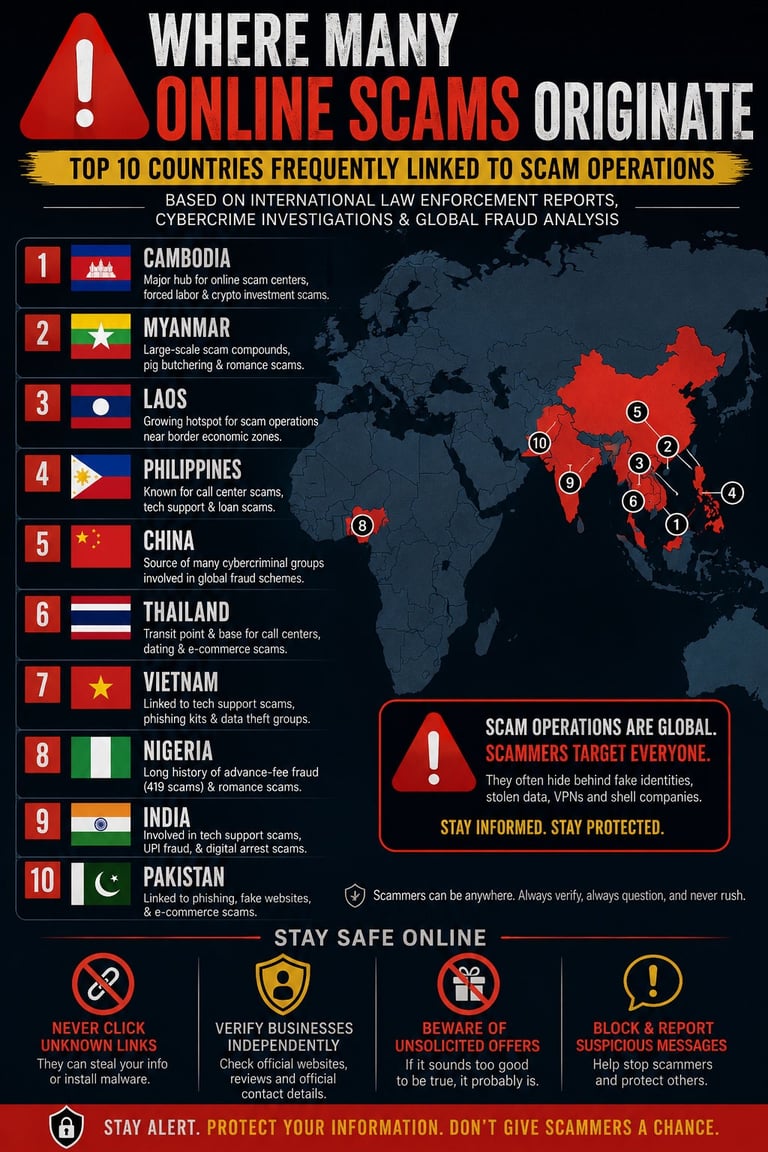
The internet has made it easier than ever to find creative talent. Unfortunately, it has also made it easier for bad actors to appear legitimate. The agency in question might have their basis covered on the surface. However, when you take a closer you should be able to see multiple clues of deception.
Do your research.
Ask questions.
Verify everything.
And remember: A professional agency should be easy to find, easy to verify, and proud to show its work. Also if the pricing seems too good to be true... it most likely is.
Blog / The Web Design and Graphic Design Scam
Evan's Creative Studio
Copyright 2026 ® evanipo.com All Rights Reserved
Privacy Policy + Terms & Conditions
+ Store Policy + Media